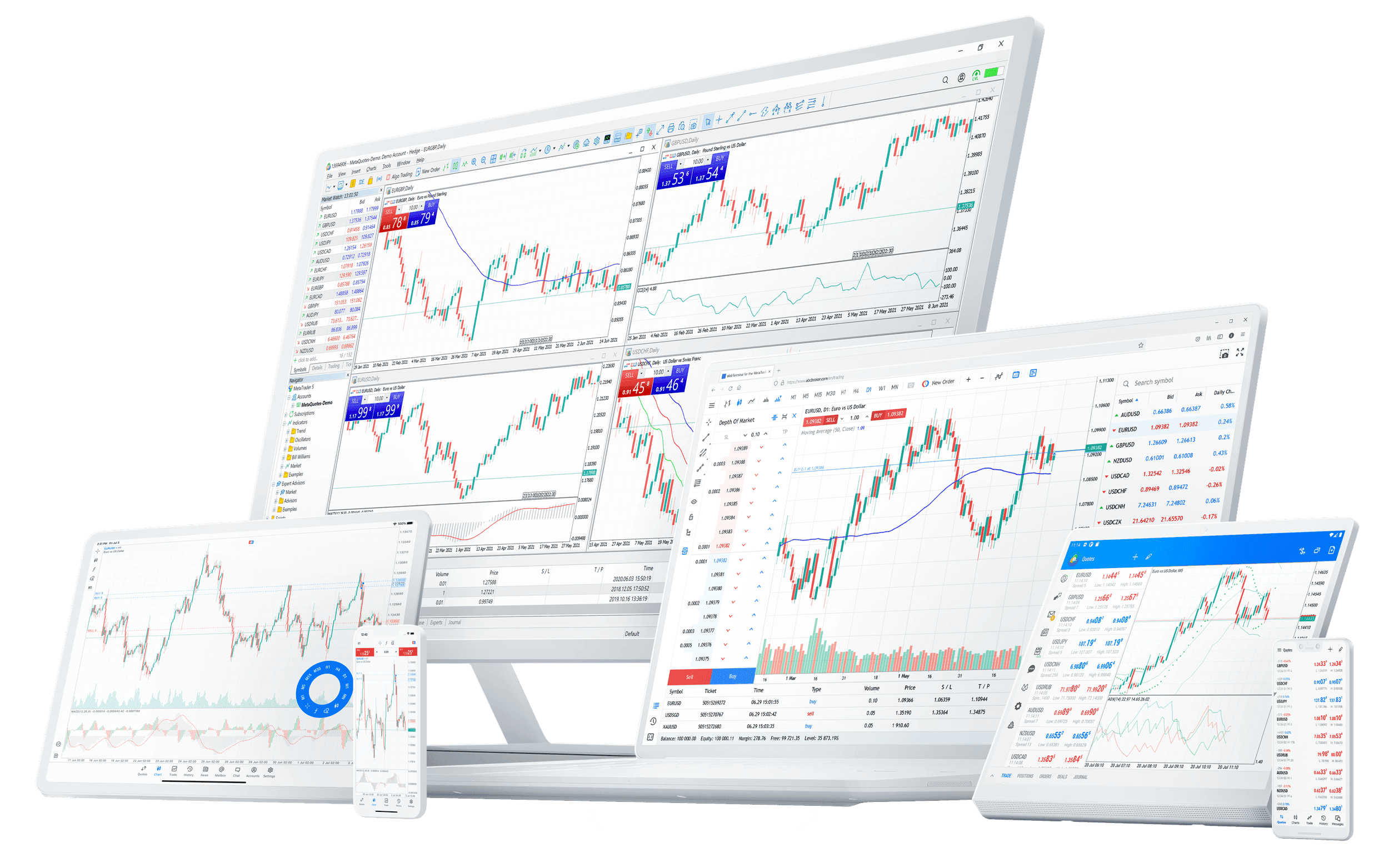
Two ways to price the same trade. A Classic account folds all your cost into the spread — one number, nothing else to think about. A Raw account shows you the market's tight raw spread and charges a separate, fixed commission per lot. Same broker, same liquidity — different packaging.
The question isn't which is "better." It's which is cheaper for the way you actually trade. Here's the maths, without the spin.
The two models, side by side
| Classic | Raw | |
|---|---|---|
| Spread | Wider (cost baked in) | Raw / near-zero |
| Commission | None | Fixed per lot |
| Best for | Simplicity, smaller size | Frequent / larger trades |
How to compare them honestly — total cost per trade
The only fair comparison is all-in cost on one round turn. Convert everything to the same unit (cost per standard lot):
- Classic: spread in pips × pip value.
- Raw: (raw spread in pips × pip value) + commission per lot.
Take EUR/USD as an example, where one pip on a standard lot is about $10:
- Classic at a 1.2-pip spread → ~$12 round turn.
- Raw at a 0.2-pip spread + $3.5-per-side commission ($7 round turn) → 0.2 × $10 + $7 = $9 round turn.
On that trade the Raw account is cheaper. But flip the spread wider or the size smaller and the commission starts to outweigh the spread saving. That's the whole game.
The rule of thumb
- Trade often, or in larger size? Raw almost always wins — the tight spread compounds across many lots, and the fixed commission is a small, predictable add-on. Scalpers and active day traders live here.
- Trade occasionally, or in smaller size? Classic is usually simpler and no more expensive — one spread, no commission line to track, easier to reason about.
There's no universally cheaper account — only the cheaper account for your trade size and frequency. Do the sum on your real pair before you pick.
What doesn't change between them
Both account types get the same execution, the same liquidity and the same platform — the difference is purely how the cost is presented. You're not getting worse fills on one; you're choosing whether to see the cost as one number or two. Compare the full line-up on the accounts page, and if you want the mechanics behind spreads and pip value, start with spreads, leverage and margin.
Bottom line
Add spread and commission together, on your pair, at your typical size. Whichever total is smaller is your account — and for most active traders on major pairs, that's Raw. For lighter, occasional trading, Classic keeps it simple for the same money.
This article is general information for educational purposes only and is not investment advice. Trading leveraged products carries a high risk of loss.