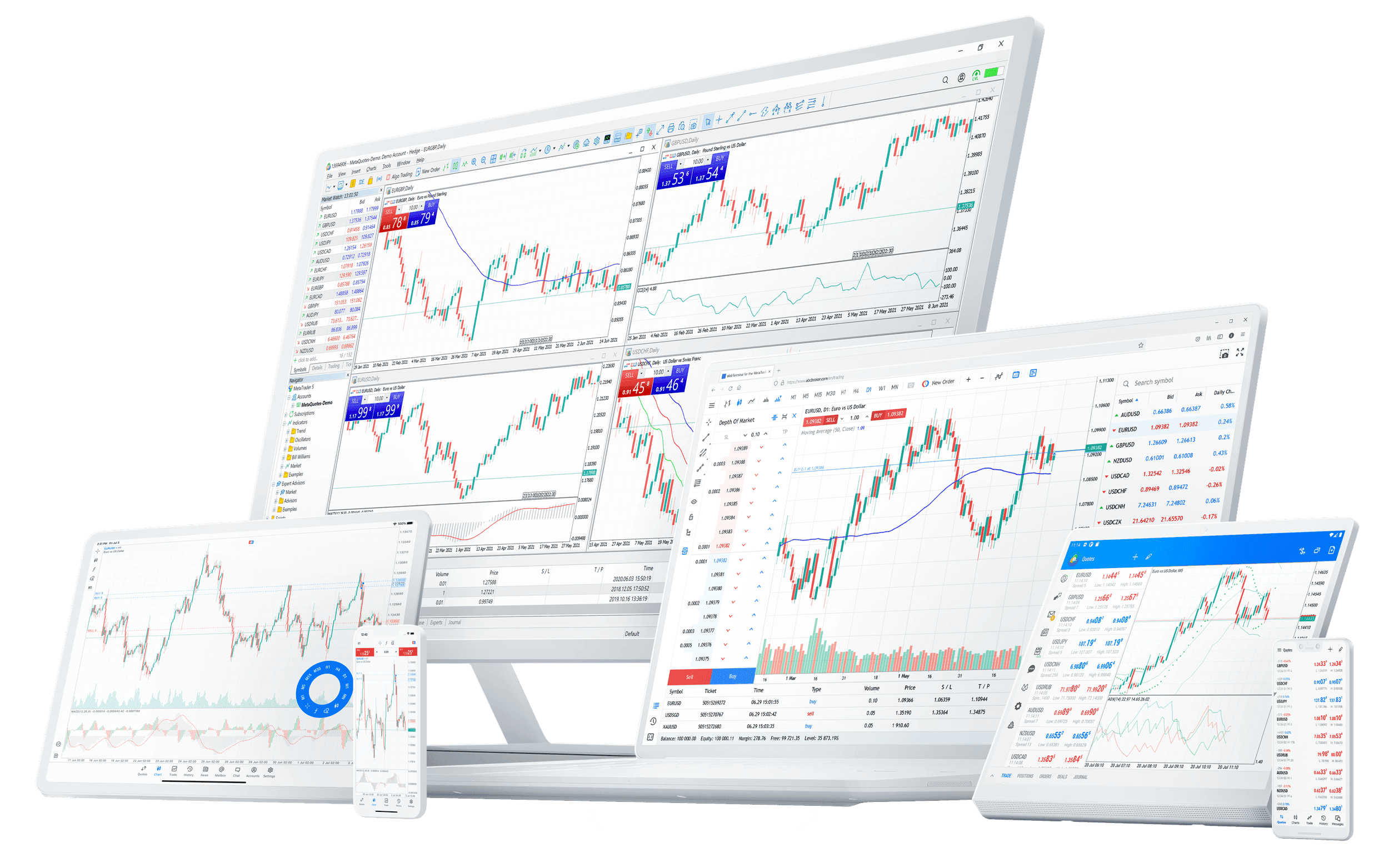
Three numbers sit behind almost every decision a trader makes: the spread you pay to enter, the leverage that sizes your exposure, and the margin held against the position. Get comfortable with these and the rest of the platform stops feeling like a foreign language.
The spread is your entry cost
Every instrument has two prices — the bid (where you can sell) and the ask (where you can buy). The gap between them is the spread, and it's the cost baked into every trade before the market moves a single pip.
If EUR/USD shows a bid of 1.0850 and an ask of 1.0851, the spread is 1 pip. Buy at the ask and the position starts marginally underwater; the market has to cover the spread before you break even.
A tighter spread is not a gimmick — on a strategy that trades often, it is one of the few costs entirely within your control when you choose where to trade.
Leverage scales your position, not your account
Leverage lets a smaller deposit control a larger position. At 1:100, $1,000 of your own funds can hold a position worth $100,000.
That cuts both ways. A 1% move in your favour is a large gain relative to the deposit — and a 1% move against you is an equally large loss. Leverage does not change the market; it changes how much of it you are exposed to.
- More leverage → smaller deposit required, larger swings in account terms
- Less leverage → more capital tied up, gentler swings
- The right level depends on your strategy and risk tolerance, not on the maximum on offer
Margin is the deposit the position holds
Margin is the slice of your balance set aside to keep a leveraged position open. On a $100,000 position at 1:100 leverage, the required margin is $1,000 — and that capital is locked while the trade is live.
Two figures are worth watching on the platform:
- Free margin — what's left to open new positions or absorb drawdown
- Margin level — equity divided by used margin, as a percentage
When the margin level falls too far, the platform issues a margin call, and positions may be closed automatically to protect the account from going negative.
A worked example
| Term | Value |
|---|---|
| Position size | 1.0 lot EUR/USD ($100,000) |
| Leverage | 1:100 |
| Required margin | $1,000 |
| Value of 1 pip | ~$10 |
| 20-pip move | ~$200 (20% of the margin) |
A 20-pip move — routine on a busy session — is a fifth of the margin committed. That is the practical reality of leverage, and exactly why position sizing matters more than entry timing for most traders.
Bringing it together
Spread is what you pay to play. Leverage decides how large you play. Margin is what the table holds while you do. None of the three is good or bad on its own — they're dials, and learning to set them deliberately is most of what separates a plan from a punt.
This article is general information for educational purposes only and is not investment advice. Trading leveraged products carries a high risk of loss.