
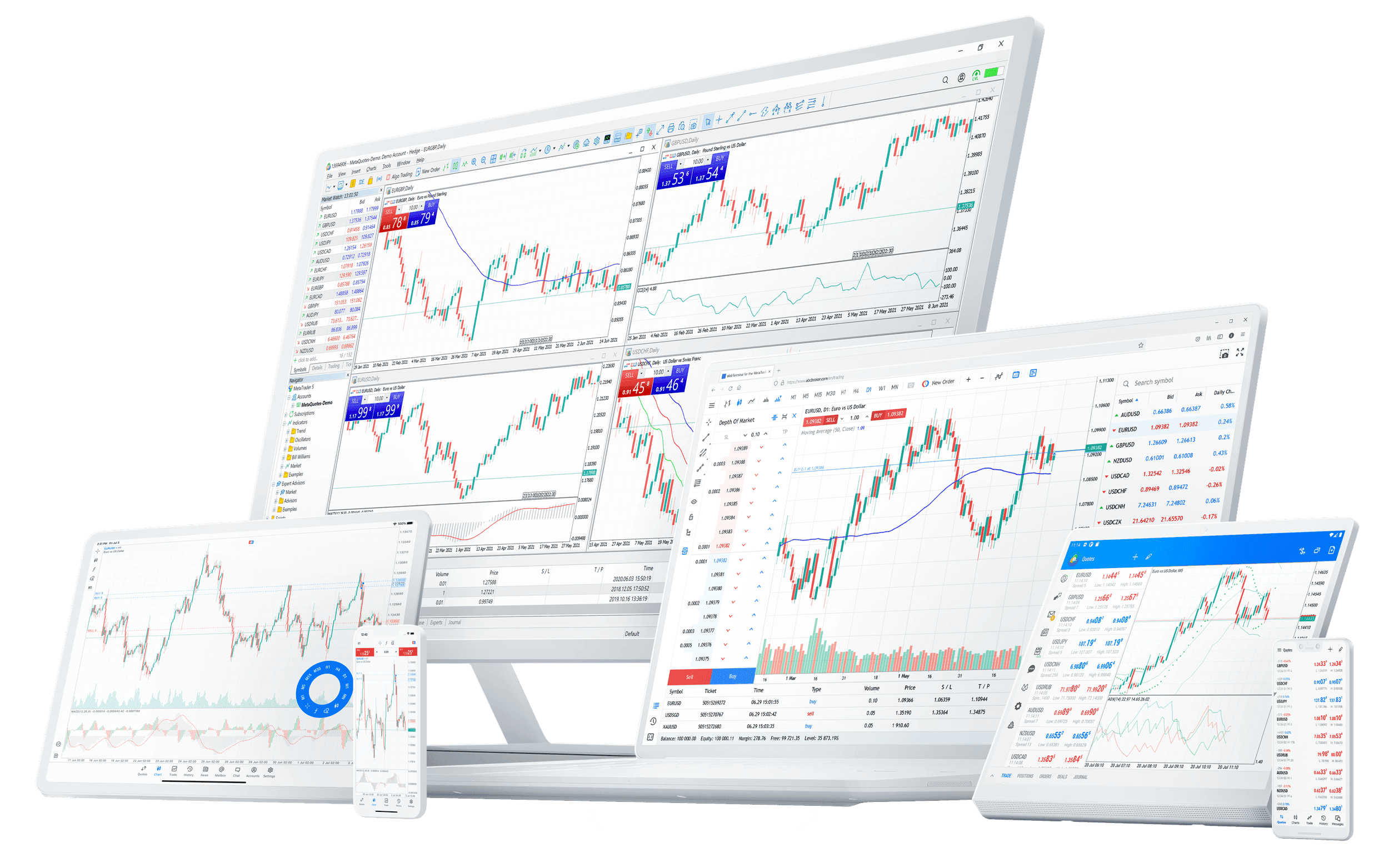
"MT5 is just the newer MT4" is the tidy answer — and it's wrong. MetaTrader 5 was built from a clean sheet, not bolted onto its predecessor, and the two platforms don't even share a programming language. If you're choosing between them, the differences are worth understanding before you commit a workflow to one.
Here's the honest version, without the marketing gloss.
The short answer
For most traders opening an account today, MetaTrader 5 is the better default — it's faster, handles more asset classes, and is the platform MetaQuotes actively develops. MT4 keeps a loyal following for one reason above all: the enormous library of custom indicators and Expert Advisors written for it over the last two decades. If a specific MT4 tool is central to how you trade, that dependency, not nostalgia, is the real reason to stay.
At Alpin Markets both run on the same execution and the same spreads, so the choice is about workflow, not about getting a better price on one over the other.
Where MT5 genuinely pulls ahead
The upgrades that matter in day-to-day trading:
- Timeframes — MT4 gives you 9; MT5 gives you 21, including the 2-, 3-, 4-, 6- and 12-hour frames that sit in MT4's blind spots.
- Order types — MT5 adds Buy Stop Limit and Sell Stop Limit on top of the standard four, for more precise entries around a level.
- Depth of Market — MT5 shows the resting orders around price. MT4 has no equivalent.
- Economic calendar, built in — MT5 carries the news calendar inside the terminal, tied to your chart. MT4 leaves you to find it elsewhere.
- Asset breadth — MT5 was designed for stocks, futures and exchange-traded instruments alongside forex. MT4 was built for forex and CFDs, and it shows.
- Speed — MT5 is a 64-bit, multi-threaded application. On a busy workspace it simply feels quicker.
None of this changes the price you get. Execution quality comes from your broker's liquidity and routing — the platform is the cockpit, not the engine.
What MT4 still does better
Being older isn't only a disadvantage:
- The ecosystem. Twenty years of community indicators, scripts and EAs were written in MQL4. Many were never ported. If your edge lives in one of them, MT4 is where it runs.
- Familiarity. If you've traded MT4 for years, the muscle memory is real and worth something. A platform you operate without thinking is a platform you make fewer mistakes on.
- Lightness. On older or lower-spec machines, MT4's smaller footprint can be the more comfortable ride.
The one thing to know up front: EAs and indicators are not cross-compatible. MQL4 and MQL5 are different languages. An MT4 robot will not run on MT5 without being rewritten — plan around that, don't discover it later.
A quick way to decide
- New to trading, or starting fresh? → MT5. You get the modern platform with nothing to migrate.
- Trading forex and CFDs with your own MT4 tools? → MT4, until those tools stop being essential.
- Want stocks, indices and futures in one place? → MT5, comfortably.
- On a slower machine, keeping it simple? → Either works; MT4 is the lighter footprint.
There's no wrong answer here — only a better fit. Many traders keep both: MT5 for its charting and breadth, MT4 for a familiar tool they're not ready to give up.
Trying both, the sensible way
Open a demo account and run the two side by side for a week on the instruments you actually trade. Set up your charts, place a few pending orders, and notice where the friction is. The platform that disappears into the background — the one you stop thinking about — is the right one for you.
Whichever you land on, both connect to the same Alpin Markets pricing, so you can switch later without changing anything about your account.
This article is general information for educational purposes only and is not investment advice. Trading leveraged products carries a high risk of loss.