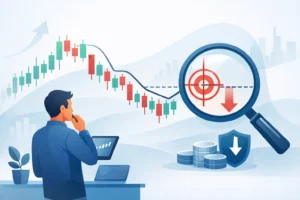








A clean chart can turn chaotic in seconds when payrolls miss expectations, inflation prints hot, or a central bank changes its tone by a single sentence. That is exactly how economic calendars help traders – they turn surprise into preparation. For anyone trading Forex, indices, metals, energies, or other CFD markets, the calendar is not background noise. It is a timing tool, a risk filter, and often the difference between a planned trade and an avoidable mistake.
Why economic calendars matter in live markets
Price does not move on technicals alone. Markets also react to new information, and the highest-impact information usually arrives on a schedule. Interest rate decisions, CPI releases, GDP figures, retail sales, employment data, and central bank speeches can all shift sentiment fast.
An economic calendar brings those events into one view. It shows what is being released, when it is due, which country it affects, and how much market impact traders expect. That sounds simple, but in practice it gives traders something valuable: context before volatility hits.
Without that context, a trader may enter a position moments before a major release and then get caught in a sharp spread expansion or a fast reversal. With it, the same trader can decide whether to stay out, reduce size, tighten risk, or wait for confirmation after the data is released.
How economic calendars help traders make better decisions
The biggest advantage is timing. Not timing in the sense of predicting every move perfectly, but timing in the sense of knowing when the market is likely to become more active. That matters because different setups work better in different conditions.
A range strategy that performs well during quiet sessions may break down completely during a high-impact US inflation print. A breakout trader, on the other hand, may specifically want that surge in volatility. The calendar helps both types of traders because it frames the environment before they commit capital.
It also helps traders connect individual markets to macro drivers. If you trade EURUSD, for example, eurozone inflation and ECB commentary matter. If you trade gold, US yields, the dollar, and Federal Reserve expectations often matter. If you trade indices, labor data and growth expectations can shape risk appetite. The calendar helps traders focus on the events that actually influence the instruments they trade instead of treating every headline as equally important.
Reading the calendar beyond the headline
Many beginners look only at the event title and impact rating. Experienced traders go further. They compare the previous figure, the forecast, and the actual result once it is released. The gap between expectation and reality is often what moves price.
That distinction matters. A strong number does not automatically mean a currency will rise or an index will fall. If the market already expected a strong number, the reaction may be limited. If the number surprises sharply, the move can be much larger. In other words, markets trade the difference between consensus and reality, not just the number itself.
There is also a hierarchy of events. Some releases move markets for a few minutes. Others reset pricing for days or weeks. Central bank decisions, inflation data, and labor reports usually sit near the top. Lower-tier releases can still matter, but often more in quiet conditions or when traders are looking for confirmation of a broader trend.
Economic calendars and risk control
One of the most practical answers to how economic calendars help traders is risk management. A calendar will not remove risk, but it makes risk more visible.
That matters because event risk is different from normal market noise. Before a major release, liquidity can thin out and spreads can widen. Right after the release, slippage and sharp price spikes are more likely. Traders who ignore this can find that a stop loss is triggered at a worse level than expected, or that a good setup gets invalidated by a short burst of volatility.
Using the calendar as part of a routine helps traders make smarter decisions before that happens. They can avoid opening new positions just before key releases, reduce exposure on open trades, or build wider stop placement into the trade plan when event-driven volatility is expected. None of those choices is universally correct. It depends on the strategy, the instrument, and the trader’s tolerance for risk. The key point is that the decision becomes deliberate rather than accidental.
How different traders use the same calendar differently
Not every trader uses the calendar in the same way, and that is where nuance matters.
Short-term traders often use it to avoid being blindsided and to identify sessions where momentum may accelerate. A scalper may stand aside during a rate decision but become active once direction becomes clearer. A day trader may build the entire session plan around one major US release.
Swing traders usually care less about the first spike and more about what the event changes in the bigger picture. If inflation keeps coming in above forecast, for instance, that can affect interest rate expectations and shape a trend across currencies, gold, and equity indices over a longer period.
Algorithmic and system-based traders also use calendar awareness, even when their entries are technical. Scheduled event filters can keep automated strategies from trading during periods where execution conditions become less stable. That is especially relevant for traders using fast execution environments and platform-based automation.
How economic calendars help traders stay disciplined
A lot of poor trades come from reacting late. A trader sees price move fast, jumps in, and only afterward realizes the move was caused by a major release that was on the schedule all along. That is not analysis. That is chasing.
A calendar supports discipline because it creates a pre-trade framework. Before the session begins, a trader can ask a few direct questions. Which events matter today? Which instruments are most exposed? Do I want pre-news setups, post-news setups, or no setups around those times at all?
That structure reduces random decision-making. It also improves review. If a trade failed, the trader can assess whether the setup was weak or whether the mistake was simply taking it too close to a known event. Over time, that kind of process sharpens execution.
Common mistakes when using an economic calendar
The first mistake is treating all red-folder or high-impact events as equal. They are not. A central bank rate decision and a mid-tier manufacturing number may both appear important on paper, but their market effect is rarely the same.
The second mistake is focusing only on one country. Forex and CFD markets are interconnected. A trader watching GBPUSD should care about UK data, but also about major US releases because the dollar side of the pair can dominate the move.
The third mistake is assuming the first reaction is the true reaction. Markets often spike, then reverse once traders digest the details. That is why patience can be a performance edge. Waiting for the first wave to settle is often a stronger choice than chasing the initial candle.
Building the calendar into your trading routine
The most effective use of a calendar is simple and consistent. Check it before the trading day begins. Mark the high-impact releases tied to your instruments. Note whether the market is likely to be quiet, reactive, or highly directional around those times.
Then connect that information to your strategy. If your approach depends on stable spreads and controlled movement, protect yourself before major releases. If your strategy is built for volatility, identify the events most likely to produce clean expansion rather than random noise. The calendar should not replace analysis. It should improve the timing and context of your analysis.
For traders using a multi-asset platform, this becomes even more valuable. One economic release can ripple across currencies, indices, metals, and energy products at the same time. Seeing that schedule in advance helps traders think in terms of market relationships rather than isolated charts.
At Alpin Markets, tools like economic calendars are most useful when they support precision rather than clutter. The goal is not to watch every event. The goal is to know which events matter to your trade, your market, and your timing.
The real edge is preparation
Markets reward speed, but not blind speed. The traders who perform consistently are usually the ones who prepare before volatility arrives, not after it has already done the damage. That is the real value behind how economic calendars help traders. They create a clearer trading environment, support better risk decisions, and keep strategy aligned with the moments that actually move price.
When you know what is coming, you do not need to guess why the market suddenly changed character. You can step in with a plan, step back when conditions are poor, and trade with more control when the opportunity is real.