A trade can look perfect on the chart and still fail the moment a high-impact data release hits the market. That is exactly why learning how to use economic calendar tools matters. If you trade Forex or CFDs, the calendar is not background information. It is a timing tool that helps you protect positions, spot volatility, and plan entries with more precision.
For active traders, speed without context is expensive. Economic releases can move currencies, indices, gold, oil, and crypto-related instruments in seconds. A central bank rate decision, inflation print, or jobs report can widen spreads, reverse momentum, or trigger breakout conditions. The calendar helps you see those moments before the market prices them in.
What an economic calendar actually shows
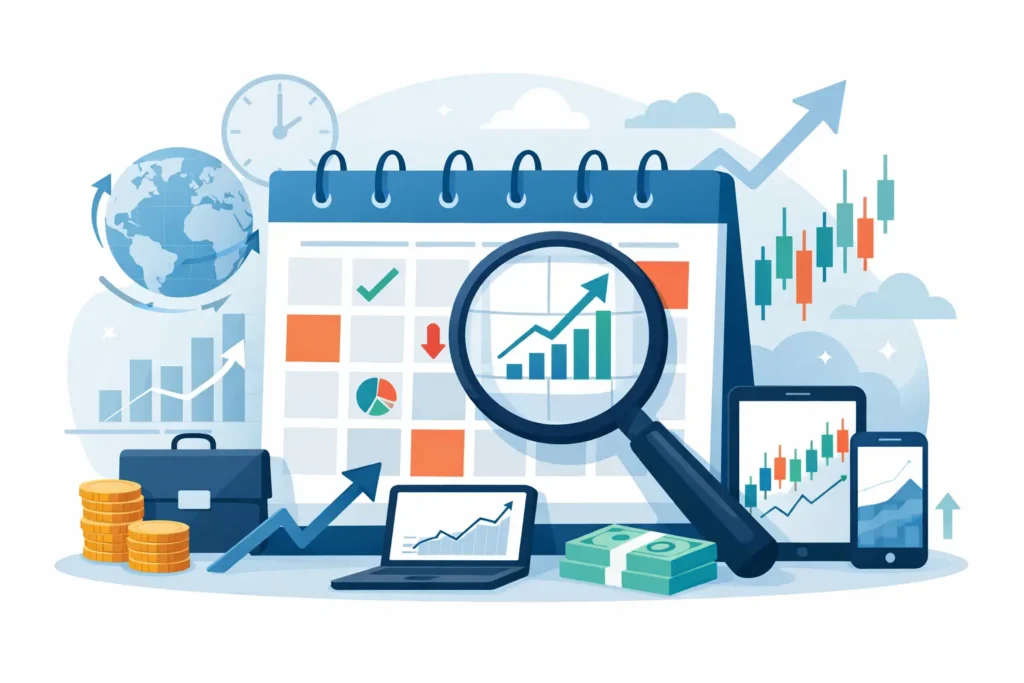
At a basic level, an economic calendar lists scheduled market events and macroeconomic releases. That includes interest rate decisions, inflation data, GDP reports, employment figures, retail sales, manufacturing surveys, speeches from central bankers, and other announcements that can move price.
Each event usually includes the release time, affected country or currency, expected impact, previous reading, forecast, and actual result once published. Those fields are simple, but they carry real trading value. The event time tells you when volatility may rise. The country tells you which instruments may react first. The forecast versus actual tells you whether the release was a surprise.
That surprise element is where many short-term moves begin. Markets do not react to numbers in isolation. They react to the gap between expectation and reality.
How to use economic calendar before you place a trade
The strongest use of the calendar happens before you enter the market, not after price starts moving. A good habit is to scan the day ahead and mark any events tied to the instruments you trade.
If you are watching EURUSD, you should care about Eurozone and US releases. If you trade gold, the US dollar, Treasury yield expectations, and Federal Reserve communication matter. If you trade indices, employment data, inflation, and central bank signals can reshape sentiment quickly.
Start by filtering for the countries and asset classes that matter to your strategy. Then identify high-impact releases. Not every event deserves the same attention. A minor housing indicator is different from Nonfarm Payrolls or a CPI report.
Once you know what is coming, decide how it affects your setup. Sometimes the right move is to stay out until the data is released. Sometimes it is to reduce position size, widen your timing window, or wait for post-news confirmation. Precision is not always about trading more. Often, it is about avoiding weak timing.
High, medium, and low impact events
Most calendars classify events by expected market impact. This is useful, but it is not perfect.
High-impact events are the obvious volatility drivers. Rate decisions, inflation reports, GDP, and top-tier labor data can trigger sharp price moves, fast reversals, and spread expansion. These are the releases most traders monitor closely.
Medium-impact events can still matter, especially in quieter sessions or when they affect a market already on edge. A manufacturing PMI may not move price every month, but during a period of recession fear it can suddenly matter more.
Low-impact events usually carry less immediate force, but they should not be ignored completely. If several smaller releases point in the same direction, they can shape sentiment over time.
This is where experience matters. Impact labels are useful for triage, not for blind decision-making. Context decides how much the market cares.
Reading forecast, previous, and actual data
If you want to know how to use economic calendar data properly, focus on the relationship between three figures: previous, forecast, and actual.
The previous number shows the last reported result. The forecast reflects what the market expects this time. The actual is the number released at the event time. When actual differs sharply from forecast, markets often react fast.
For example, if US inflation is forecast at 3.2% and comes in at 3.6%, traders may quickly price in a more hawkish central bank path. That can lift the dollar and pressure risk-sensitive assets. If inflation comes in softer than expected, the reaction may go the other way.
But it is not always that clean. Sometimes a strong number is already priced in. Sometimes a headline beats forecasts while underlying details disappoint. Sometimes the market reacts one way in the first minute and completely reverses within the hour. That is why economic calendar trading should be tied to a broader plan, not a one-number trigger.
How to use economic calendar with different trading styles
Your approach should match your trading timeframe.
Scalpers and short-term intraday traders need to be especially alert. News events can create fast opportunity, but they also create slippage risk, unstable spreads, and false breakouts. If you trade around releases, execution speed and discipline matter more than prediction.
Day traders often use the calendar to avoid entering just before major events. A setup may look strong at 8:20 a.m. and become irrelevant at 8:30 a.m. after a major US release. In that case, patience becomes part of the edge.
Swing traders use the calendar differently. They may hold positions through data, but they still need to know when exposure is likely to face a volatility spike. A multi-day trade can survive small noise, but a central bank surprise can reset the entire directional view.
Algorithmic and expert advisor users should also respect calendar timing. Even a technically strong system can underperform badly during unstable news conditions if it is not designed to filter event risk.
The best way to plan trades around news
A practical approach is to divide calendar use into three stages: before, during, and after the event.
Before the event, identify the instrument, expected impact, and possible scenarios. Ask a simple question: if the release beats, misses, or matches expectations, what is the likely first reaction?
During the event, avoid emotional execution. The first candle after a release can be fast but misleading. Many traders get trapped chasing the initial move without checking spread conditions or waiting for structure.
After the event, assess whether price confirms the fundamental signal. Did the market break a key level and hold it? Did volume and momentum follow through? Or did the move fade immediately? Post-release confirmation often gives cleaner setups than the first few seconds of chaos.
This is where strategy meets discipline. A calendar does not tell you what button to press. It tells you when precision matters most.
Common mistakes traders make
One common mistake is treating every high-impact event as a trade signal. Some events create noise, not opportunity. If your system works best in stable conditions, forcing trades during major releases may reduce performance instead of improving it.
Another mistake is ignoring correlated markets. A US rate decision does not just affect USD pairs. It can move gold, indices, oil sentiment, and broader risk appetite. Traders who focus too narrowly can miss the bigger market response.
A third mistake is failing to adjust risk. News trading with standard lot size and tight stops can be a costly mismatch. Volatility changes the conditions. Position sizing should reflect that.
And finally, many beginners read the calendar but forget the market narrative. The same jobs number can produce different reactions depending on whether traders are focused on inflation, recession risk, or central bank policy.
How to build the calendar into your routine
The most effective traders do not check the economic calendar randomly. They build it into their daily process.
Before the trading session begins, mark key release times and set alerts. Review the consensus forecast and note which instruments may react. If you use technical analysis, map out support, resistance, and liquidity zones before the event, not during it.
Then decide your rule set. Will you avoid new positions 15 minutes before a major release? Will you wait for the first candle close after the data? Will you reduce exposure on open trades ahead of central bank announcements? Rules reduce hesitation when markets speed up.
A modern trading environment makes this easier. On platforms such as MetaTrader 5, traders can combine live charts, market watchlists, and economic event awareness in one workflow. That helps turn information into action faster, which matters when price is moving in real time.
Why the calendar is a risk tool first
Many traders think of the calendar as an opportunity tool. It is that, but first it is a risk tool.
Knowing when markets are likely to become unstable helps you avoid poor entries, unrealistic stop placement, and unnecessary exposure. That alone can improve trading performance. You do not need to trade every release to benefit from the calendar. Often, the smarter move is simply not getting caught on the wrong side of avoidable volatility.
Used correctly, the economic calendar gives you something every trader needs more of – timing with context. And in leveraged markets, better timing is not a small advantage. It is part of staying in the game long enough to build real consistency.